Author: Kate Zambreno Read Date: 7/8/2026
Quick Review
Enjoyed this diaristic “novel” about a woman struggling to write her book very much. Definitely a book for writers or artists—people engaging with the creative process and therefore equally fascinated and tortured by it. Appeals to the commonplace book lovers and Rilke lovers. Kate always has a notebook with her and it shows.
The amount of correspondence and literary friendships was gorgeous and I’m inspired to identify the Sofia to my Kate (or am I the Sofia?)
Books, Art Mentioned
- Rilke’s The Notebooks of Malte Laurids Brigge
- Robert Walser
- The Walk
- The Tanners
- Sarah Charlesworth Stills
- Peter Hujar dog photo
- Wittgenstein’s Philosophical Investigations
- Roland Barthes by Roland Barthes
- Agnes Varda’s The Beaches of Agnes
- “If we opened people up, we’d find landscapes”
Concepts
Maurice Blanchot désœuvrement (idleness)
- “What prevents a book from being written is the book itself”
- “the state where the writing of the fragment replaces the work”
Quotes
- Drifts is my fantasy of a memoir about nothing. I desire to be drained of the personal. To not give myself away.
- “What prevents a book from being written becomes the book itself”—found in my notebook, citing the notebooks of Camus, who was himself quoting Marcus Aurelius
- I like the idea of yoga being about a practice, about not knowing. That’s what writing is for me. A ritual. My impulse to write was private, was the way that I was silent, or not silent, in the face of capitalism, desire, the family.
- Was being a writer a way of escaping from having a job, or was it…extreme discipline and unceasing solitary labor?
- Cornell copying down into his journal a line from a Rilke biography: “In the letters written between 1910 and 1914 we find Rilke (continually) expressing a longing for human companionship and affection, and then, often immediately afterwards asking whether he could really respond to such companionship if it were offered to him, and wondering whether, after all, his real task might lie elsewhere.”
- All we can do is wonder over the imaginary solitude of others, what others do when they are alone, how they deal with the vastness and ephemerality of the day, which I think is for me increasingly the meaning and crisis of art.
- Rilke himself remains so far from being able to work at all times. He wishes he had no pleasurable memories of not working. Hours spent waiting, flipping through old illustrations, looking at some novel. If only it were enough, he writes, to have a dog and sit in front of a shop window for twenty years.
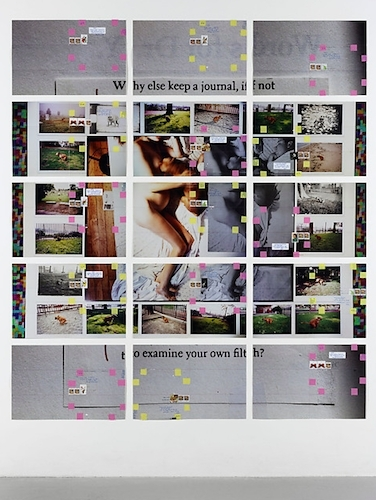
- “Why else keep a journal, if not to examine your own filth?” - Anne Sexton